Pool maintenance: a practical guide to cleaning it and caring for the water
Follow a simple routine to remove debris, balance the water and check the filtration system. Includes the cleaning order, suggested frequencies and signs to watch for.
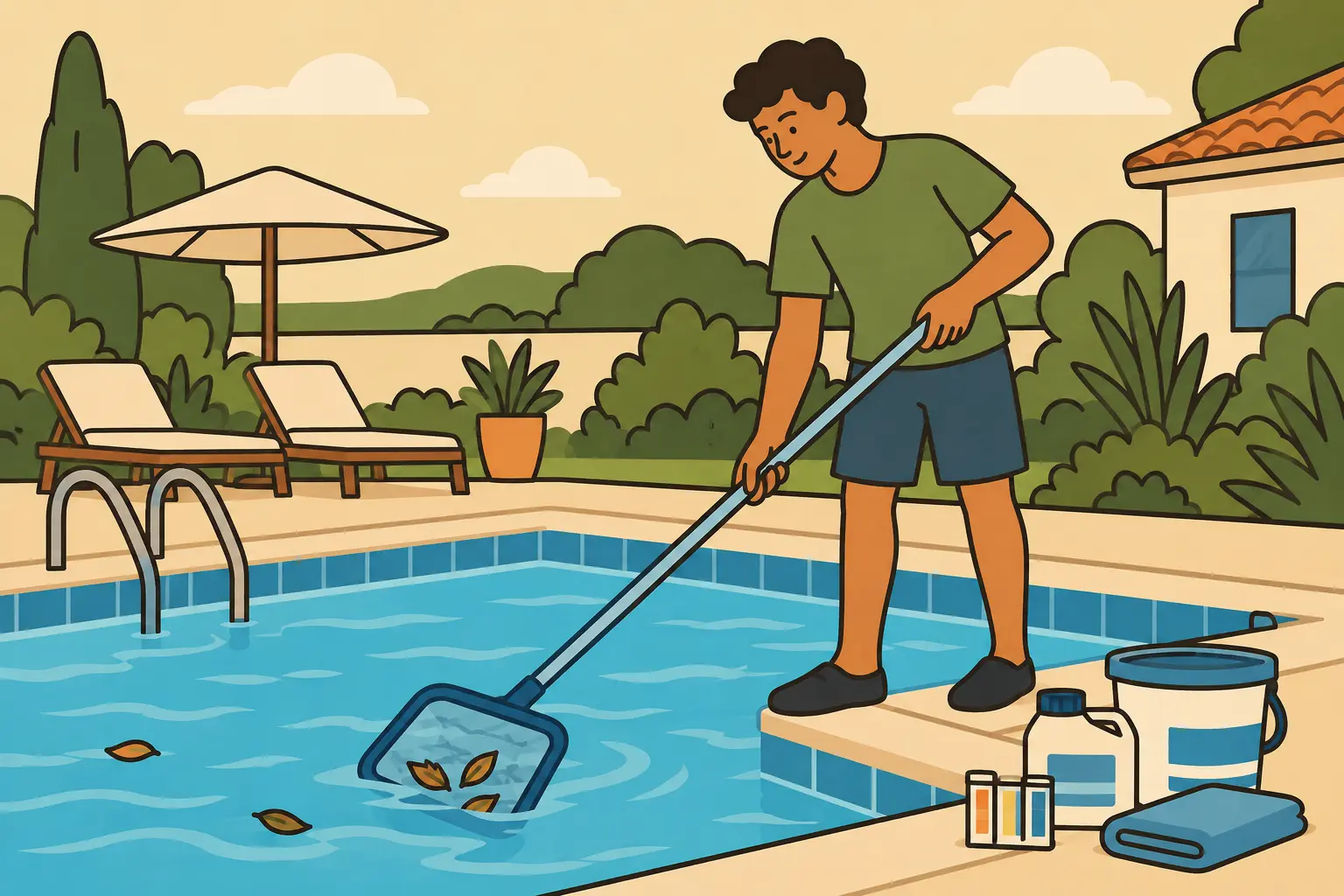
Pool maintenance is easier when you follow a set order: remove debris, clean the surfaces, check the filtration system and test the water. These regular tasks help prevent algae, cloudy water, irritation and breakdowns without using more time or products than necessary.
In this guide, you’ll find a practical routine for home pools. The frequency should be adjusted to the temperature, number of swimmers, nearby vegetation, rainfall and use of a cover, but brief, regular checks can usually prevent intensive cleaning.
Why pool maintenance is important
Leaves, dust, insects and sunscreen residue use up disinfectant and can make circulation more difficult. If they build up, slippery areas, stains, unpleasant odors or loss of clarity can occur. Waiting for the water to change color usually means more work than removing debris promptly.
Pool care relies on three connected tasks: physical cleaning, filtration and water balance. The brush and pool cleaner loosen or collect debris; the pump moves water through the filter; and monitoring the pH and disinfectant keeps the treatment at appropriate levels. The filtration system does not replace brushing, and adding products will not fix poor circulation.
How to clean a pool step by step
To understand how to clean a pool without moving the same debris around several times, it helps to work from top to bottom. Have a leaf skimmer, a brush suitable for your pool finish and a pool cleaner appropriate for the pool’s size and shape ready.
Remove debris from the surface
Skim leaves, insects and other floating debris before they sink or reach the skimmers. Use gentle strokes to avoid scattering them. Repeat this task after a storm, a windy day or a busy day with lots of swimmers.Brush the walls and waterline
Clean the waterline, walls, steps, corners and areas with poor circulation. Use a brush suitable for tile, liner, fiberglass or the installed finish. Carefully scrub any areas that feel slimy, greasy or slippery.Clean the bottom
A manual pool cleaner lets you target specific areas, while a hydraulic model uses the pool’s suction. A pool robot works autonomously and saves time when cleaning frequently. Before choosing one, check which surfaces it cleans, the pool dimensions it supports and whether it is compatible with your pool.Empty the baskets and check the pump strainer
Remove debris from the skimmer baskets and check the pump strainer. Before opening any component, stop the equipment, disconnect the power when appropriate and follow the manufacturer’s instructions. Then secure the lids properly and check that circulation is normal.
If you notice persistent bubbles at the return jets, reduced flow or new noises from the pump afterward, check for clogged baskets, a low water level or a lid that is not properly closed. Do not leave the equipment running if you suspect it is operating without water.
Weekly pool maintenance
Test the pH and disinfectant
Weekly pool maintenance should include testing the water with strips, liquid reagents or a digital meter. As a general guideline, keep the pH between 7.2 and 7.6, but follow the recommended levels for your treatment system. Test the water before adding adjusters, and apply each product separately, following its dosage and wait time.
Check the filtration system
Make sure the water level allows the skimmers to draw water without taking in air, and check the flow at the return jets. Also compare the filter pressure gauge with its usual reading. If the pressure has increased, you may need to backwash and rinse a sand filter or clean a cartridge; follow the manufacturer’s instructions.
Inspect the equipment
Look for leaks, moisture around connections, vibrations or unusual noises. Also check the water clarity and areas with poor circulation. Catching a blockage, air leak or early signs of algae lets you act before the problem affects the entire pool.
How often to clean a pool, by task
To decide how often to clean a pool, use this suggested schedule along with regular visual checks. Heat, wind, storms, vegetation and heavy use mean you’ll need to clean more often.
| Suggested frequency | Recommended tasks |
|---|---|
| Daily or every other day | Remove floating debris and check the water’s appearance, level and circulation. |
| Once or twice a week | Test the pH and disinfectant, brush the surfaces and clean the bottom. |
| As needed | Empty baskets, clean the filter and adjust filtration to the temperature and level of use. |
| At the start, during and at the end of the season | Check the pump, filter, seals, lights, dosing system, saltwater chlorinator and accessories. |
Filtration hours should not stay the same all year. They are calculated based on the water volume and the system’s actual flow rate, then adjusted for temperature, debris and swimmers. A cover reduces debris and evaporation, but it does not replace treatment or circulation.
Common mistakes when cleaning and caring for a pool
The most common mistake is adding products without testing the water. Guesswork can cause imbalances and increase consumption. Do not mix chemicals together or add them at the same time unless the instructions explicitly state that it is safe. Use protective gear, follow the recommended doses and store containers closed, separately and out of reach of children and pets.
Clear pool water is not always balanced: testing the water and checking circulation can help you identify problems before they become visible.
It’s also best not to clean the filter just because it’s on the calendar or keep the same filtration schedule throughout the season. Use its normal pressure, flow rate and the equipment instructions as your guide. If the water remains cloudy, the pressure is abnormal or the pump makes unusual noises after basic checks, consult a professional before dismantling components or handling the electrical system.
A simple routine for enjoying your pool
Good pool maintenance combines cleaning, filtration and testing, with a frequency adapted to actual use. If you need help choosing a robotic pool cleaner, a testing system, water treatment products or a compatible replacement part, the CholloPiscinas team can help you find the right solution for your pool.
Frequently asked questions
How often should you clean a pool in summer?
Remove debris and check the water daily or every other day. Test the pH and disinfectant, brush the surfaces and clean the bottom once or twice a week. Clean more often after storms, windy weather, high temperatures or heavy use.
What is the correct order for cleaning a pool?
First, remove leaves and insects from the surface. Then brush the waterline, walls, steps and corners; clean the bottom; and finish by emptying the baskets and checking the pump strainer, with the equipment stopped when appropriate.
How many hours a day should the pool pump run?
There is no single number that works for every pool. The runtime depends on the water volume, the system’s actual flow rate, temperature, debris and number of swimmers. Work out how long it takes to circulate the water and adjust the schedule throughout the season, following the equipment specifications.
What do you need for weekly pool maintenance?
You’ll need a way to test the pH and disinfectant, products compatible with the installed treatment system, a leaf skimmer, a brush suitable for the pool finish and a pool cleaner. You should also check the baskets, filter, flow rate and water level.
How do you keep a pool clean when it’s not in use?
Use a suitable cover, keep the filtration system running and continue monitoring the pH, disinfectant and water level. Remove any debris that gets in and check the equipment regularly. Fewer swimmers may reduce some maintenance needs, but it doesn’t mean you can stop maintenance completely.
Comments
Log in to comment and like.
Login