Pool pH: how to identify imbalances, correct them, and keep the water just right
A practical guide to understanding pool pH, spotting whether it’s too high or low, correcting it step by step, and keeping the water balanced all season long.
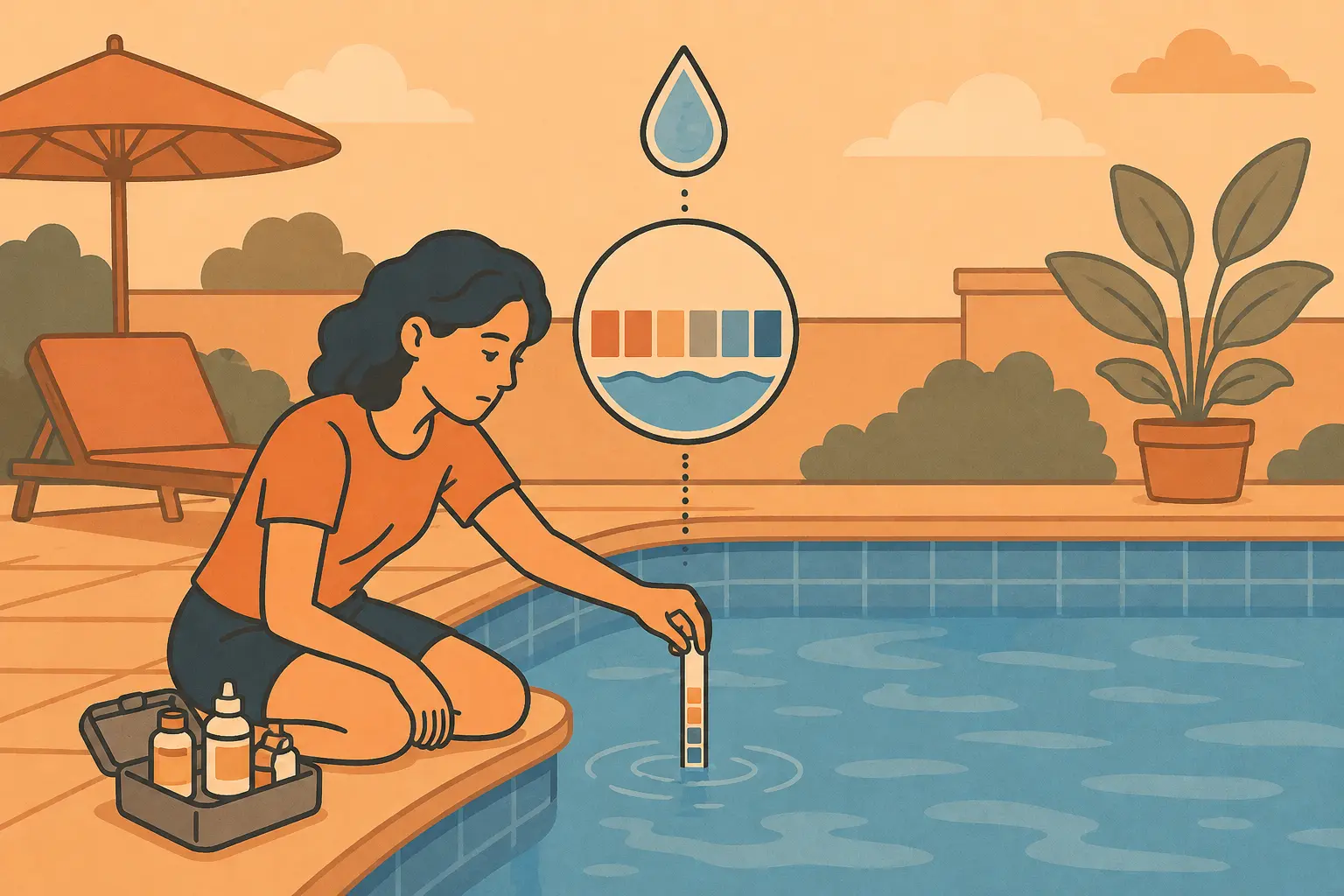
Pool pH is one of the values that has the greatest impact on water quality and, at the same time, one of the things that can prevent the most problems when properly monitored. If you notice cloudy water, a stronger chlorine smell, stinging eyes, a rough feel, or scale along the waterline, it’s worth checking as soon as possible. Understanding why pool pH rises, how to spot an imbalance, and how to lower pool pH without overdoing it can help you use less product, keep the water in better condition, and avoid unnecessary wear on your pool system.
The practical side is easier than it might seem. With a reliable test, a carefully measured correction, and a simple monitoring routine, keeping pool pH within range becomes much easier. And it’s not just about adjusting a number: the right pH helps pool chlorine work more effectively, makes swimming more comfortable, and helps protect the pump, filter, chlorinator, surfaces, and accessories.
What pool pH is and why it has such a big impact on water quality
pH indicates whether water is acidic, neutral, or alkaline. In a pool, the recommended range is usually between 7.2 and 7.6. This range supports effective disinfection, comfortable swimming, and a more stable environment for your equipment. When the reading falls below this range, the water becomes more aggressive; when it rises above it, chlorine becomes less effective and cloudiness and scale buildup become more likely.
That’s why pH shouldn’t be checked in isolation. Many problems that seem to be caused by chlorine, filtration, or dirt actually start with a chemical imbalance. If your pool pH is out of range, the sanitizer may be present but not working as it should. The result is familiar: more product used, more corrections needed, and the feeling that the water never quite looks right.
What is the recommended pH level for a pool?
As a practical guide, keeping the pH between 7.2 and 7.6 is usually the most comfortable and stable range. You don’t need to chase an exact decimal reading every day, but you should avoid letting the water stay above or below range for several days. Stability matters more than achieving a perfect reading.
When pH gets out of balance, the water often gives you warning signs. It may lose its sparkle, smell more strongly of chlorine, leave whitish deposits along the waterline, or feel less comfortable when you swim. Spotting these signs early lets you make corrections before the problem affects the rest of your maintenance routine.
How are pool pH and disinfection connected?
The connection between pool pH and disinfection is direct. Balanced water allows chlorine to work more effectively and keep the pool clear with less effort. When pH is out of range, however, chlorine becomes less effective, the water clouds more easily, and maintenance becomes more costly.
This explains why a pool sometimes uses more chlorine than usual or needs repeated treatments without ever quite stabilizing. Before adding more sanitizer, check whether the real issue is incorrectly adjusted pH. Correcting this first often saves time and money.
How to measure pool pH correctly
The most reliable way to find out whether your water is balanced is to measure its pH under the right conditions. You can use test strips, liquid reagents, or digital meters. Strips are quick and convenient for frequent checks. Liquid reagents usually provide a clear, economical reading. Digital meters are very useful if you want greater precision and keep them properly calibrated.
Using the right testing method matters, but so does following a consistent process. Ideally, take a sample while the water is circulating, away from the return jets, and not immediately after adding products. If you compare readings from one day to the next, try to test at a similar time of day to spot real trends rather than temporary fluctuations.
When should you test again?
Although a weekly check may be enough under normal conditions, there are situations when it’s worth testing before problems appear. For example, after heavy rain, adding fresh water, several very hot days, intensive pool use, or a shock treatment. The water balance can change easily at these times.
This extra check doesn’t take long and can often prevent bigger corrections. If you catch a small deviation early, you’ll need less product and reduce the risk of cloudy water, scale, or ineffective disinfection.
Common mistakes when measuring pH
One of the most common mistakes is testing just after adding pH adjuster, chlorine, or other products. Another is using expired or poorly stored strips or reagents. You should also avoid taking samples from areas where the water doesn’t circulate well, as these may not give a representative reading for the whole pool.
To make sure your test results are useful, the key is simple: be consistent, use equipment in good condition, and always wait a little while after adding any product. This basic routine makes the difference between making an informed correction and guessing.
How to tell if your pool pH is too high or too low
Your test result is the main reference, but the way the water behaves can also offer clues. Knowing the usual signs makes it easier to identify whether the problem is high or low pH before pool maintenance becomes more complicated. Even so, don’t make corrections based on guesswork alone: test first, then take action.
It’s also helpful to keep a simple record of your results. Note the date, pH, chlorine level, and whether it has rained, you’ve added water, or the pool has seen heavy use. This can reveal useful patterns. In many pools, an imbalance doesn’t happen by chance; it keeps recurring after the same situations.
Signs that the pH is too high
If the pH is high, the most common signs are cloudy water or a loss of sparkle, a rough feel, and a noticeable drop in chlorine effectiveness. Scale deposits may also appear on the walls, skimmers, jets, ladder, or waterline. In these cases, many pool owners assume they need more chlorine, when the real problem is that the sanitizer isn’t working properly because of the pH.
This is a very common situation in summer: the water looks fine in the morning, but the heat and pool use make it lose clarity, leaving you feeling like maintenance never ends. If you also have hard water or top up the pool frequently, pH is likely to keep rising.
Signs that the pH is too low
When pH is low, the water becomes more aggressive. You may notice eye and skin irritation, discomfort while swimming, and, over time, worn seals, corrosion on metal components, and damage to certain materials. Sometimes the water still looks clear, making it seem as though everything is fine, even though the problem may already be affecting the pool system.
That’s why you shouldn’t wait for visible damage to appear. If the water feels uncomfortable or the pH is outside the recommended range, it’s worth acting promptly and methodically to avoid a chain of further problems.
Situation | Common signs | Most common consequences |
|---|---|---|
High pH | Cloudy water, scale, rough feel, less effective chlorine | More spent on sanitizer, scale buildup, loss of sparkle |
Low pH | Irritation, aggressive water, corrosion, material wear | Damage to equipment and surfaces, less comfortable swimming |
Why pool pH rises: the most common causes
One of the most common questions is why pool pH rises even when you follow a reasonable maintenance routine. In practice, there’s rarely just one cause. Several factors usually come into play at once, and understanding them can make a big difference in preventing the problem from recurring week after week.
The water you add to the pool plays an important role. If you top it up often and the water has high hardness or high alkalinity, the pH is more likely to rise. In that case, lowering the reading once may not be enough: if the underlying cause remains, the pH will rise again.
The effect of tap water and alkalinity
Alkalinity acts as a stabilizer for the water. When it’s high, the pH tends to stay elevated and becomes more resistant to correction. This explains why some pools seem to respond well to pH adjuster, only to be out of range again a few days later.
This is especially common in areas with hard water. Each time you top up for evaporation, backwash the filter, clean the pool, or replace water lost to splashing, minerals are added that encourage scale buildup and push the pH upward. If you top up frequently during the summer, you’ll need to monitor pH more consistently.
Temperature, evaporation, and pool use
Heat also has a big impact. In summer, evaporation increases, more water is added to top up the pool, and the pool gets more use. This combination makes the chemical balance less stable and means pool pH tends to rise faster than in spring or at the start of the season.
Heavy use also adds sunscreen, organic matter, and more movement in the water. These factors don’t always cause an abrupt change in pH, but they can lead to small deviations that become a bigger problem after a few days if they go unchecked.
Salt chlorination and pH fluctuations
Salt chlorination is convenient and popular with many pool owners, but it can also contribute to a gradual rise in pH if it isn’t checked regularly. This isn’t a drawback of the system itself, but a characteristic of how it works that you should keep in mind when setting up your monitoring routine.
Water aeration can also have more of an impact than you might expect. Waterfalls, jets, built-in spas, return jets aimed at the surface, and even vigorous swimming all increase water movement and can push the pH upward. So when you wonder why pool pH rises, the answer is usually a combination of top-up water, alkalinity, heat, evaporation, and aeration.
Problems caused by unbalanced pH for the water, swimmers, and pool system
When pH moves outside the recommended range, the first impact is usually on how well pool chlorine works. If the sanitizer is less effective, keeping the water clear and safe requires more product or repeated treatments. This increases costs and makes maintenance more complicated than it needs to be when the water is balanced.
It also affects the swimming experience. Swimmers may notice stinging eyes, dry skin, an unpleasant smell, or discomfort when they get into the water. Chlorine often gets the blame, but many of these issues occur because the pH is incorrectly adjusted, not necessarily because there’s too much sanitizer.
How pH affects chlorine and disinfection
If the pH is too high, chlorine becomes less effective and the water may turn cloudy even when the chlorine reading seems correct. If it’s too low, the water becomes aggressive and swimming is less comfortable. In either case, maintenance becomes more complicated because the main issue isn’t the amount of product, but the condition of the water.
You can also see the imbalance. The water may lose its sparkle, become slightly cloudy, or leave visible residue. Before assuming there’s a problem with the filter or pool cleaner, check the water’s chemical balance. Mechanical cleaning alone often doesn’t solve the underlying issue.
Risks to filters, pumps, and pool surfaces
Damage to the pool system can be costly. High pH encourages scale buildup in pipes, along the waterline, in the chlorinator cell, and on various hydraulic components. Low pH, on the other hand, can speed up corrosion and wear on metal parts, seals, heat exchangers, jets, and delicate surfaces.
That’s why the best approach is usually to act early, but without improvising. Guessing at corrections or mixing treatments without a clear order is one of the quickest ways to waste time and product. Test first, interpret the result, and then make the correction.
How to lower pool pH step by step and avoid common mistakes
If your test confirms a high reading, it’s time to decide how to lower pool pH safely and effectively. The recommended process is simple: test accurately, calculate the pool’s actual volume, apply the right product at the correct dose, and test again after the recommended waiting time. The key is careful dosing, not rushing.
In practice, many overcorrections happen because the pool volume is estimated inaccurately or doses are repeated too soon. When that happens, pH can drop from too high to too low, setting off a chain of unnecessary adjustments.
What product should you use to lower pH?
A pH reducer or adjuster is usually used, in liquid or solid form, depending on the treatment system and your preference. The important thing is to follow the manufacturer’s instructions and use the correct dose for the pool’s actual volume. Adding more product than necessary won’t speed things up; it will only increase the risk of overcorrecting.
For best results, run the pump while applying the product, distribute it evenly, and let the water circulate before testing again. If the imbalance is significant, it’s usually more effective to make several small adjustments rather than trying to fix it all at once.
How long should you wait before testing again?
After dosing, wait for the time specified by the manufacturer so the product can mix thoroughly and the reading is reliable. Testing too soon may make you think it hasn’t worked or, conversely, lead you to add too much because the water hasn’t mixed evenly yet.
A practical, methodical approach would look like this:
Test the pH and note the result.
Calculate the pool’s actual water volume.
Check the manufacturer’s recommended dose for the pH adjuster.
Add the product while the filtration system is running.
Wait for the recommended time and don’t swim during this period.
Test again and make another adjustment only if the pH is still out of range.
Check the chlorine level afterward to make sure disinfection is balanced.
Mistakes that waste time and product
The most common mistakes are adding product by eye, correcting pH at the same time as other treatments, failing to check alkalinity when the pH rises again soon afterward, or not checking pool chlorine afterward. It’s also common to repeat a dose without waiting, making it difficult to tell which adjustment worked and which didn’t.
If you’re looking for how to lower pool pH for a lasting result, the most important thing isn’t adding more product, but following a simple, consistent process. This reduces overcorrections and keeps the water stable for longer.
What to do if the pH is too low and how to restore balance
The pH is considered low when it falls below the recommended range, especially below 7.2. Even if the water still looks clear, don’t leave it that way. Low pH means more aggressive water, which affects both swimming comfort and the durability of many components.
In these cases, acting promptly can help prevent corrosion, discomfort while swimming, and damage to materials. Just as with high pH, make the correction only after testing and calculating the right dose, rather than estimating.
How to raise pH without unbalancing the water
Use a dedicated pH increaser, based on the pool’s actual water volume and the manufacturer’s instructions. Keep the pump running, distribute the dose evenly, and test again only after the recommended circulation time. Small, gradual corrections usually give better results than trying to reach the ideal range in one application.
This is especially important if your pool has metal ladders, heat exchangers, jets, seals, or sensitive surfaces. Even if the water doesn’t seem problematic at first glance, leaving it aggressive for several days can cause damage over time.
When should you also check alkalinity?
If the pH drops easily, changes suddenly, or is difficult to keep stable throughout the week, it’s worth checking total alkalinity as well. Many persistent fluctuations can’t be fully resolved by adjusting pH alone, because the underlying cause lies in the water’s overall balance.
Once the pH is back in range, check pool chlorine again. This final step is important to confirm that the water is not only balanced in terms of pH, but also properly disinfected and ready for comfortable swimming.
How to keep pool pH stable all season long
Keeping pool pH stable doesn’t depend on making big, occasional corrections, but on carrying out small, regular checks. Under normal conditions, a weekly routine is usually enough. In summer, after a heat wave, heavy rain, a party, or frequent water top-ups, check more often so you can catch any issues early.
The sooner you spot a deviation, the less product you’ll need and the easier it will be to keep the water clear. That’s the most practical way to save time on maintenance: prevent major corrections with simple, regular checks.
A basic chemical maintenance routine
As a rule, it’s worth checking pH and pool chlorine after rainfall, adding fresh water, shock treatments, several hot days, or heavy pool use. If you already know your pool tends to have rising pH, make this extra check part of your routine rather than waiting until the water starts causing problems.
Several preventive steps can also help: clean the filter, ensure good circulation, monitor the waterline, avoid adding too many products, and check that the return jets aren’t causing excessive aeration. These simple steps can significantly reduce fluctuations.
Products and accessories that make pH monitoring easier
If you want to save time, it’s worth using reliable meters, dosing systems, and properly adjusted treatment systems. They don’t completely replace supervision, but they do make it easier to follow a consistent routine and spot deviations before they become bigger problems.
Ultimately, taking care of pool pH is one of the most straightforward ways to simplify maintenance, improve water quality, and protect your pool system. To make things easier this season, review your testing routine and choose products to test, adjust, and stabilize the water, with expert advice to help you find the option that best suits your pool.
Frequently asked questions
What is the ideal pool pH for chlorine to work well?
The recommended range is usually between 7.2 and 7.6. Within this range, chlorine works more effectively, the water is more comfortable to swim in, and the risk of scale buildup or corrosion is reduced.
Why does pool pH rise even when I add chlorine regularly?
Because rising pH isn’t caused by chlorine alone. Factors include the water used to top up the pool, alkalinity, evaporation, heat, water aeration, and, in many pools, salt chlorination. If the pH keeps rising, it’s worth checking the cause rather than simply adding more product.
How can I lower pool pH quickly without damaging the water or equipment?
The safe approach is to test first, calculate the dose based on the pool’s actual water volume, and apply a pH reducer exactly as directed by the manufacturer. Do this while the pump is running, let the water circulate, and test again before making another correction.
What happens if pool pH stays high for several days?
Chlorine becomes less effective, the water may turn cloudy or dull, scale deposits may appear, and you’ll use more pool chemicals. Some equipment and surfaces may also accumulate deposits, making maintenance harder and accelerating wear.
How often should I test the pH and chlorine in my pool?
At least once a week. In summer, after rain, topping up the water, heavy use, heat waves, or shock treatments, test more often so you can correct small deviations before they become bigger problems.
Comments
Log in to comment and like.
Login