Pool Water Problems: How to Fix Green and Cloudy Water
Not all green water is caused by algae, and cloudy water doesn’t always need more chlorine. Learn how to identify the cause and restore clarity: test, correct, treat, and filter.
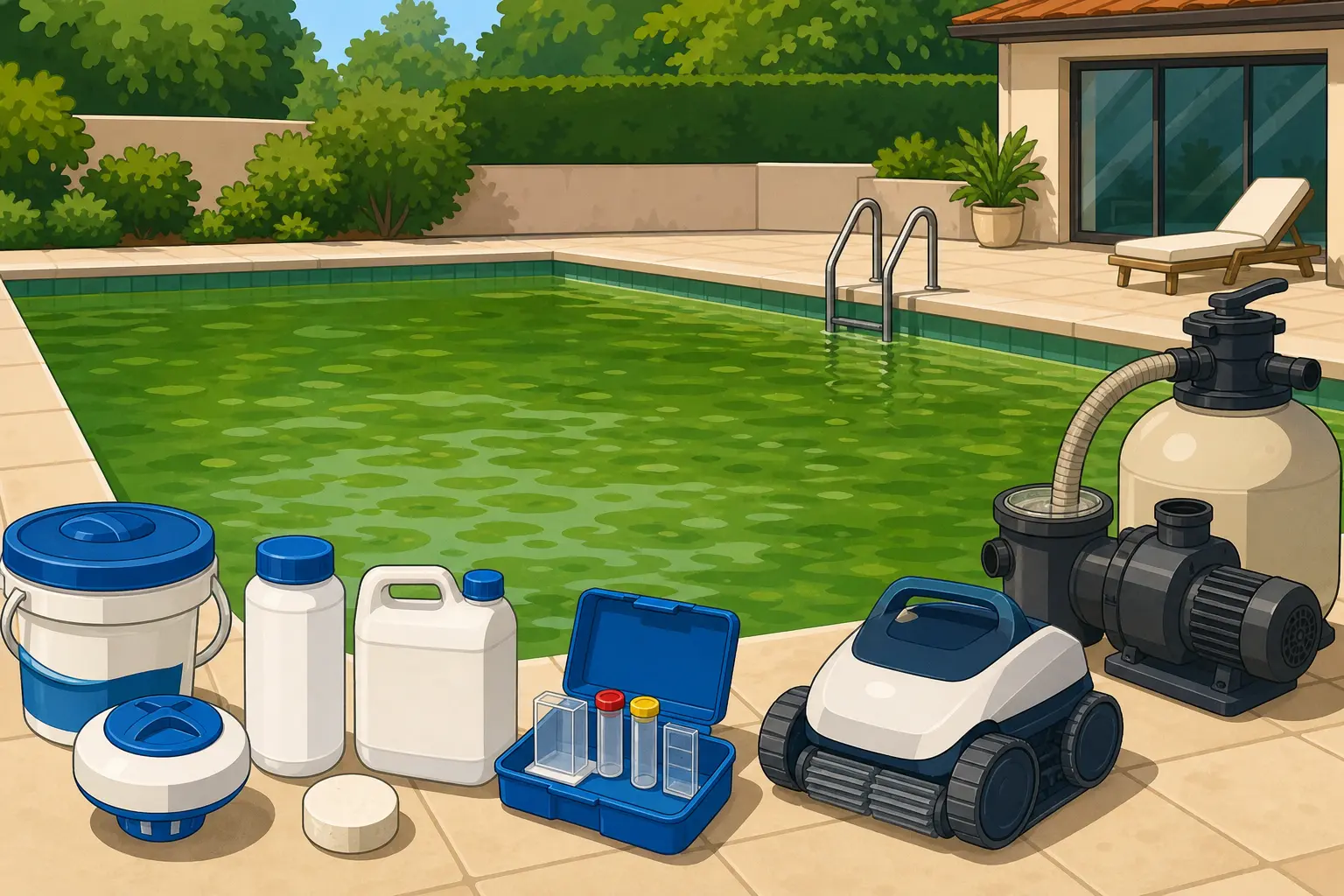
Pool water problems aren’t always solved by adding more chlorine. Green water may indicate algae or metals; cloudy water may point to poor filtration or an imbalance in the water. To restore clarity without spending money on unnecessary products, follow these steps in order: test, correct, treat, and filter.
How to identify pool water problems
Look at the water and use a brush to check for deposits on surfaces. These signs can point you in the right direction, but they don’t replace water testing:
| Sign | Possible cause |
|---|---|
| Green water and slippery walls | Algae |
| Greenish but clear water | Dissolved metals, such as copper |
| Whitish water or visible particles | Insufficient filtration, algae residue, or precipitated calcium |
Test the pH and sanitizer with a reliable kit. As a general guide, keep the pH between 7.2 and 7.6, following the instructions for your treatment. If you use chlorine, check the free chlorine level: testing total chlorine alone isn’t enough to assess disinfection.
Also check the return flow, filter pressure, and operating hours. Make a note if the change occurred after a storm, heavy use, or adding water from a well.
How to clear green pool water step by step
If you see green deposits and slippery surfaces, algae are likely present. Combine cleaning, disinfection, and filtration:
- Remove debris and brush. Skim leaves and clean the walls, corners, steps, and bottom to loosen attached algae.
- Correct the pH and treat the water. Apply a shock treatment compatible with your system, calculated for the actual water volume. Follow the dosage and label instructions. Never mix products together or add them at the same time; observe the specified intervals.
- Filter and remove the residue. Increase filtration during recovery according to the equipment instructions. Monitor pressure and flow, clean the filter when needed, and vacuum up the residue. Test the water again before repeating the treatment.
If the water is green but clear, especially after adding an oxidizer or well water, test for iron and copper before repeating the shock treatment. More oxidizer can intensify the discoloration. Choose a metal treatment based on the test results and its compatibility with your system.
How to clear cloudy pool water
Cloudiness can be caused by fine particles, dead algae, insufficient sanitizer, or precipitated calcium. Even if chlorine is present, the filter may not be trapping dirt properly.
Correct any parameters that are out of range and clean the skimmer and pump pre-filter baskets. Check that water is flowing freely. For sand filters, backwash and rinse when needed, following the manufacturer’s instructions. Turn off the pump before moving the multiport valve. For cartridge filters, clean or replace the filter element; don’t backwash.
If particles remain, consider a clarifier or flocculant that’s compatible with your filter. They aren’t interchangeable and aren’t always necessary. Some flocculants aren’t suitable for cartridge filters. If the product requires settling, observe the recommended waiting time and vacuum slowly to waste, if your system allows it. Don’t pick up the sediment with the pool robot: it could disperse it.
Is the water still green or cloudy? What to check
Check the water volume used to calculate the dose and make sure the reagents haven’t expired. If you use stabilized chlorine and the algae keep returning, test the cyanuric acid or stabilizer level: buildup reduces chlorine’s disinfecting effectiveness.
If persistent cloudiness has a whitish appearance, test the alkalinity and calcium hardness. If flow is still low after cleaning, have the equipment inspected before adding more products.
Repeatedly applying treatments without testing can increase costs and make it harder to restore the water.
How to prevent future problems and when it’s safe to swim again
Check the pH and sanitizer several times a week, more often during hot weather or periods of heavy use. Test the water after significant rainfall. Adjust filtration based on the temperature, number of swimmers, and equipment: there’s no single number of hours that works for every pool.
Don’t swim if you can’t clearly see the bottom. After treatment, follow the label’s waiting times and conditions. Make sure the water is clear and that the pH and sanitizer are within the appropriate ranges for swimming.
Need help with pool water problems? Contact CholloPiscinas with your pool volume, filter type, and test results. We’ll help you choose the right treatment, without unnecessary purchases.
Frequently asked questions
How long does it take to clear green pool water?
It may take several days, depending on the algae and filtration. Track progress with water tests, not just by the color.
Why is the water still cloudy even though it has chlorine?
It may contain particles, dead algae, or precipitated calcium. Check the water balance and filter before adding more chlorine.
Can you clear green pool water without draining the pool?
In many cases, yes. Draining the pool usually isn’t the first step; decide based on the cause and test results.
Comments
Log in to comment and like.
Login